
Journalists in Romania are increasingly facing threats and intimidation, while a fragile justice system and growing pressure on press freedom are weakening their work. Investigative journalist Emilia Șercan knows better than anyone how far this intimidation can go.
By: Lisa De Vos
When Romanian investigative journalist Emilia Șercan exposed plagiarism in the doctoral thesis of then Prime Minister Nicolae Ciucă in 2022, she expected political backlash. What she did not expect was that intimate private photos would be stolen from her personal archive and published on ten different porn websites. “They were photos from twenty years ago, where I was coming out of the shower, with a towel around me and a towel on my head. This is not porn.”
For Șercan, one conclusion became unavoidable: anyone investigating power in Romania must not only fear reputational damage, but can also face institutional resistance. “It was a shock. People often call me brave, but I always say I am just doing my job.”
Șercan has been an investigative journalist for almost thirty years, publishing on corruption, plagiarism and abuse of power. According to her, threats and smear campaigns have become increasingly common. Her investigations into academic fraud among top politicians, in particular, triggered strong reactions. What makes her case unusual is the role of state institutions. Evidence she handed over to the police, including screenshots of her stolen photos appearing on porn sites, was shortly afterwards published online. Her complaint was closed without consequences. “I filed a second complaint for the disclosure of evidence from a criminal file. Initially, both cases were closed: according to the prosecutor, no crime had been committed.” Only after intervention by two judges was the case reopened, where it is still ongoing today.
Captured justice
According to Șercan, her experience is not an isolated case: “The justice system is sometimes like a lottery, where outcomes are unpredictable, even when you have evidence.”
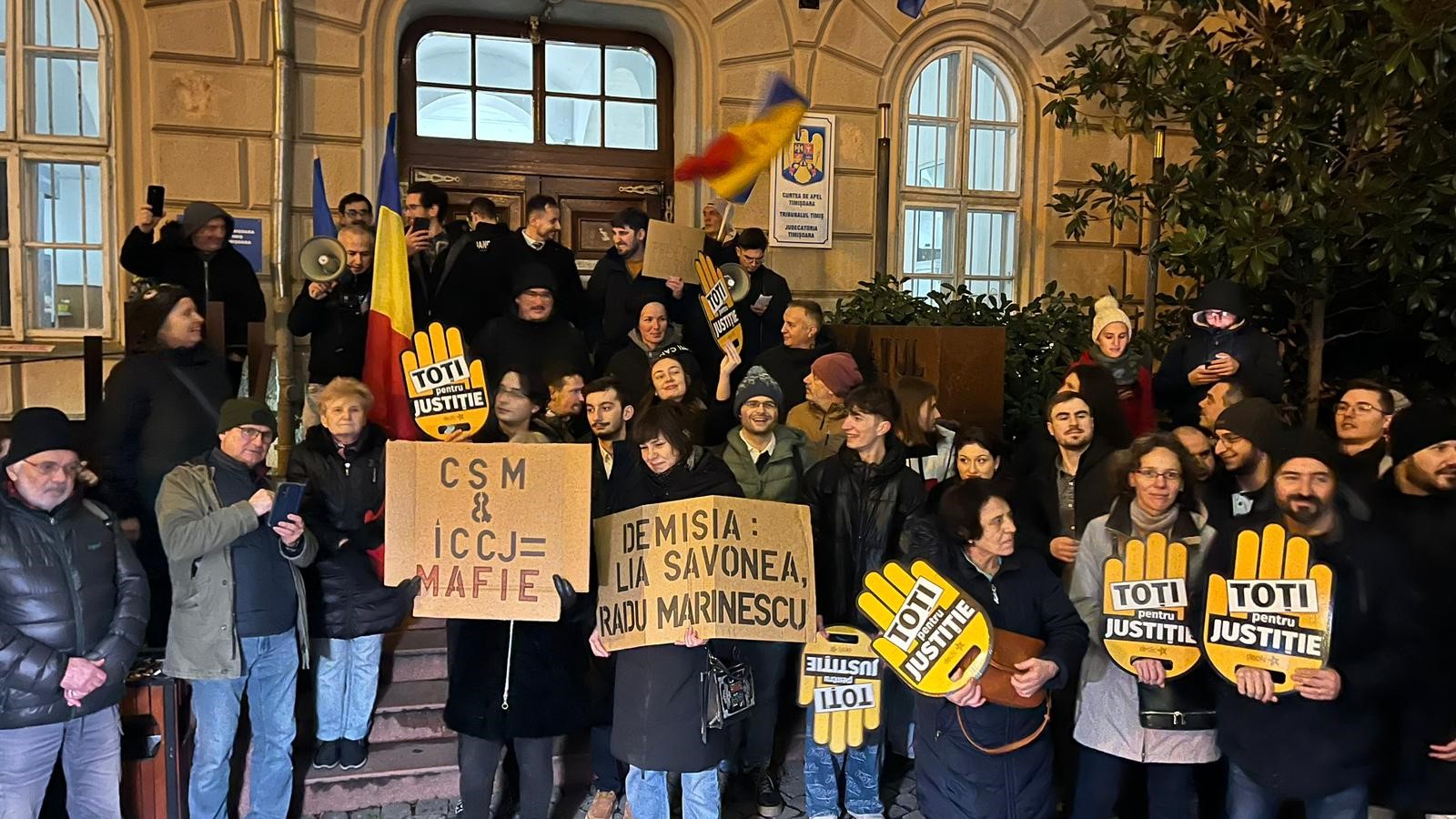
This structural uncertainty is at the centre of the documentary Justiție Capturată (Captured Justice), a production by the independent Romanian platform Recorder. The film shows how a small group of magistrates and court officials holds disproportionate influence over sensitive cases. Selective justice, endless procedures and internal power networks are said to undermine public trust in the justice system. Tens of thousands of people took to the streets across Romania in December 2025, calling for judicial reform and greater transparency, but without success.
European oversight
The fragile state of Romania’s judiciary and press freedom recently also received attention in the European Parliament. In January, a subcommittee of the LIBE committee held a debate in Brussels on the rule of law in Romania. According to Romanian news platform G4Media, the composition of the panel was striking: one critical media voice compared to several representatives of the justice system, raising questions about the balance and framing of the debate.
International reports also point to persistent problems. The latest European Commission Rule of Law report highlights structural shortcomings in judicial independence, the length of court proceedings, and the effectiveness of anti-corruption efforts. According to Reporters Without Borders, Romania remains vulnerable in terms of press freedom, including legal pressure on and intimidation of investigative journalists.
Struggle
For Cristina Guseth, director of Freedom House Romania, the link between the two fields is fundamental: “For a democratic society, justice and journalism are the most important pillars. When you control these, you control the country.”
She points to a deeper problem within the rule of law: “Romania is still a corrupt country, probably less corrupt than 15 years ago. But we have a real problem with our judicial sector.” According to her, a dysfunctional justice system not only weakens the fight against corruption, but also undermines citizens’ trust in media and institutions.
Șercan continues to find herself in this tension. Her case is still ongoing, those responsible for the leak have not been identified, and the intimidation has not stopped her work. What happened to her shows how vulnerable investigative journalists remain when the very institutions meant to protect them become subjects of investigation themselves.
In Romania, press freedom is not an abstract principle, but a daily struggle. Investigative journalists like Șercan are not only fighting political power, but also the weaknesses within the rule of law that should protect press freedom.
About author:
Lisa De Vos is a journalism student from Brussels, Belgium, who will graduate this year. From September to February, she took part in an Erasmus exchange in Romania, where she continued her journalism studies. During those six months, she lived in Timișoara, the city of the revolution, an experience that became one of the most memorable and meaningful chapters of her student life. She remains deeply grateful for the opportunity and still looks back on her time in Romania with great affection. The country continues to fascinate her to this day.
For her bachelor’s thesis, Lisa wrote an article on how press freedom in Romania is being undermined by the justice system. As part of her research, she visited Freedom House Romania and interviewed Cristina Guseth.
Lisa is currently an intern at VRT NWS, the public broadcaster of Flanders, where she works on the international news desk. The experience is giving her valuable insight into the daily workings of a newsroom and the world of international reporting. As she prepares to graduate, she is excited to see where her passion for journalism will take her next.